

A missed call may be a new customer, an existing appointment, or a question that takes only a minute to answer. An AI receptionist can give those calls a defined next step when your team is busy. The useful starting point is a clear call flow with accurate information and a route to a person.
Start with routine calls
Consider the questions you answer repeatedly: your service area, opening hours, appointment process, and what a customer needs to prepare. Give the assistant approved answers and tell it what it should say when information is missing.
- Explain the services you actually provide.
- Capture a caller’s name, contact details, and reason for calling.
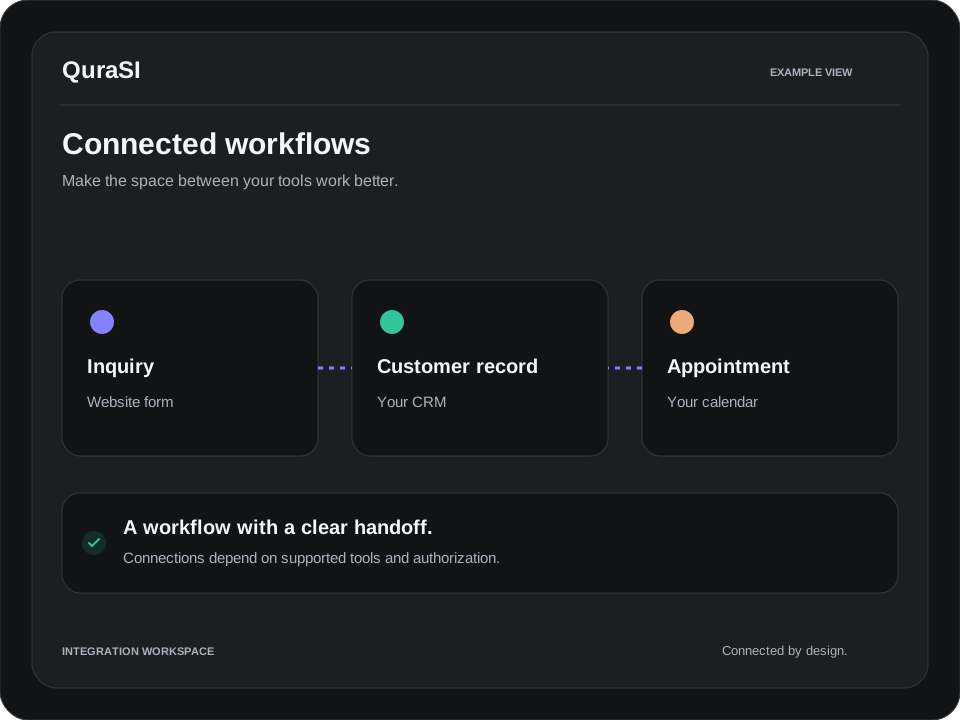
- Offer an appointment where a supported calendar connection allows it.
- Send a summary to the appropriate person or connected system.
These are possible setup choices, not capabilities every provider includes. A voice service, telephone connection, calendar, and CRM may each require a separate account or subscription.
Define the boundaries
A receptionist should not invent prices, promise availability it cannot confirm, or make decisions your staff would normally approve. If you offer estimates, specify whether the assistant may share a published starting price or should arrange a follow-up.
Set clear rules for complaints, unusual requests, urgent situations, and callers who ask for a person. An unavailable transfer needs a fallback, such as taking a message and explaining your actual callback process.