The best first automation is often an ordinary task you repeat every week. It might be moving an inquiry into a contact list, reminding someone about an appointment, or assigning a follow-up after an estimate is approved.
Choosing a useful starting point begins with your process. Write down what happens today before selecting a tool. If the steps change every time, clarify the process first.
Find the repetition
For a few working days, note where you copy, type, check, or remind someone about the same thing. Record how often it happens and roughly how long it takes. Include time spent correcting mistakes or searching for missing information.
- Which details are entered more than once?
- Which requests wait because nobody owns the next step?
- Which reminders are easy to forget?
- Which task has a clear beginning and end?
Look for clear rules
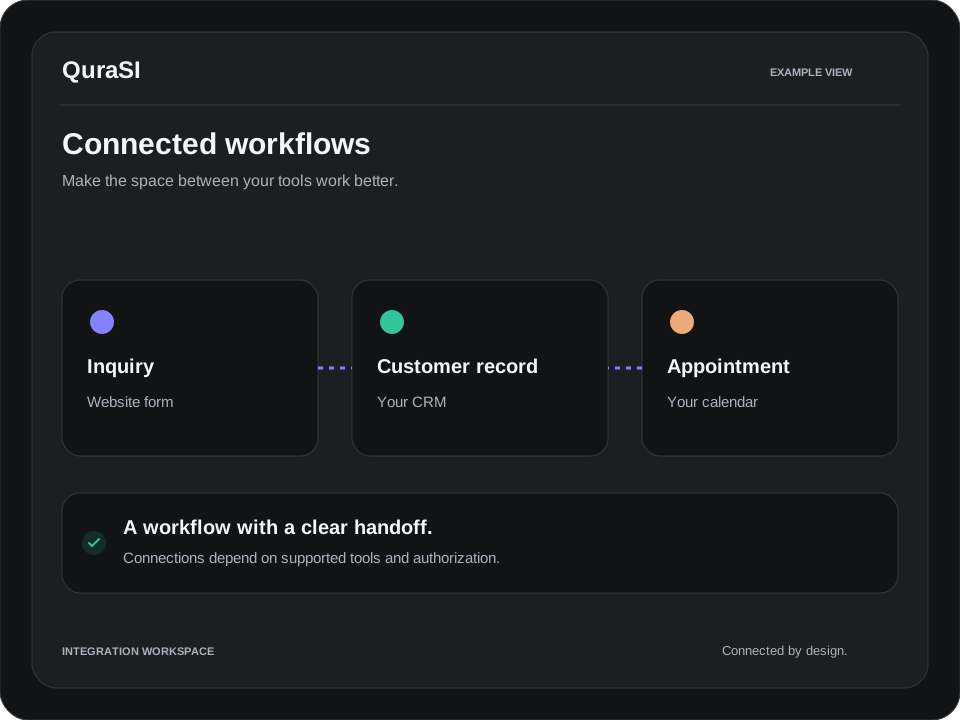
A strong candidate has a recognizable trigger and a predictable result. “When a consultation is booked, create a contact record and notify me” is clearer than “automate my business.”
Write down the exceptions too. What if the customer already exists, the booking is cancelled, or a required field is missing? A workflow should route an exception to the right person rather than silently guessing.
Compare the effort
Estimate the current monthly effort using frequency multiplied by average handling time. Then compare that with setup cost, recurring software or usage fees, and the time needed to maintain the workflow. The result is a planning estimate, not a guaranteed saving.
A task that takes two minutes twice a month may not justify a complex integration. A modest workflow that removes a daily interruption may be a better first project.
Keep approval where it matters
You can automate preparation while retaining review. An assistant might draft a response or prepare an invoice record, with a person checking the details before anything is sent. Decide which actions are allowed automatically and which require approval.
Set one useful measure
Choose a result you can actually check: fewer duplicate entries, fewer missed follow-ups, shorter inquiry handling time, or more appointments with complete contact information. Take a baseline before setup and compare it after a trial period.
- One process and one clear owner.
- A documented trigger and result.
- A plan for errors and exceptions.
- A simple way to measure the outcome.
Start with one workflow, improve it, then decide whether to expand. QuraSI can help review your tools and define a practical setup. See packages or discuss your first workflow.